
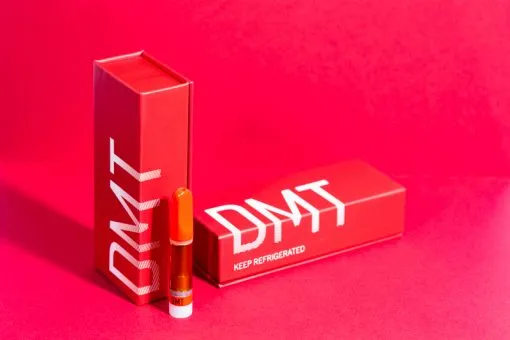
DMT Cartridge
$200.00
DMT (N,N-Dimethyltryptamine) is a naturally occurring psychedelic compound found in plants and animals. Known as the “spirit molecule,” it produces intense short-lived hallucinations. Illegal in most countries, studied for potential therapeutic use in controlled research.
Additional information
Description
Description
DMT: Meaning, Uses, Effects, and More
What is DMT? (Meaning & Full Form)
• Drug (N,N-Dimethyltryptamine) – A naturally occurring indole alkaloid and powerful psychedelic. DMT is found in many plants and animals and is sometimes called the “spirit molecule” for its profound effects . (Chemically, DMT has the structure shown below.) It produces intense, short-lived hallucinations when smoked or inhaled, or when consumed in brews like ayahuasca .
• Banking/Finance (Domestic Money Transfer) – In banking and fintech, DMT often abbreviates Domestic Money Transfer. For example, some banks and payment services have a “DMT portal” for sending remittances between bank accounts .
• Sportswear (DMT Shoes) – DMT is an Italian sportswear brand, best known for high-performance cycling shoes. The company (founded in 1983) emphasizes quality and innovation in road cycling and running footwear .
• Other contexts – Depending on context, DMT might also appear as acronyms like “Direct Message Transfer” (in messaging apps), “Dynamic Mechanical Testing” (in engineering), etc
DMT (Drug) – Overview
N,N-Dimethyltryptamine (DMT) is a potent, naturally occurring psychedelic. As a plant-derived hallucinogen, it has no well-established medical use . DMT is usually smoked, vaporized or injected for a rapid onset of effects, or taken orally in an ayahuasca brew (which uses MAO-inhibiting plants to make DMT active) . The experience is very brief compared to other psychedelics: one source notes that when inhaled, the peak typically lasts 15–30 minutes and resolves within 30–45 minutes .
Ayahuasca ceremonies, by contrast, can produce DMT effects lasting several hours . Users report intense visual and auditory hallucinations and a dramatically altered sense of time, space and self .
Many describe the experience as deeply emotional or mystical – even leading to ego-dissolution or encounters with seemingly sentient “entities” – which is why DMT is sometimes called the “spirit molecule” . Physically, DMT causes only mild stimulant effects: it can transiently raise blood pressure and heart rate and dilate pupils .
DMT Effects
• Hallucinations: Vivid visual (often geometric or fractal) and auditory hallucinations . Colors, lights and intricate patterns are common.
• Perception changes: Deep distortion of time and space (minutes can feel like eternity) and altered self-awareness . Users often report profound introspection or spiritual feelings .
• Physiology: Mild autonomic effects – transient increase in heart rate and blood pressure, muscle twitches or tremors, and pupil dilation .
• Duration: Extremely short-acting when smoked/vaped – on the order of 5–30 minutes . (By comparison, ayahuasca DMT lasts ~3–5 hours .)
Is DMT Legal?
• Generally illegal: In the United States and most countries, DMT is a Schedule I (or equivalent) controlled substance, meaning it is illegal to manufacture, possess, or distribute . The UN’s 1971 Psychotropic Convention classifies DMT as Schedule I worldwide , so most nations treat it as strictly prohibited.
• Religious/ritual exceptions: A few countries allow DMT in traditional or religious contexts. For example, Brazil legalized ayahuasca (a DMT-containing brew) for use in ceremonies in the 1980s . In Canada and the US, certain religious groups (like Santo Daime churches) have been granted exemptions to use ayahuasca legally . In research, a handful of clinical trials and retreat centers operate under special permissions, but any DMT use outside such sanctioned settings is illegal.
Related Compounds: 5-MeO and 4-AcO-DMT
• 5-MeO-DMT: (5-Methoxy-DMT) – A close chemical cousin of DMT found in some plants and famously in the venom of the Colorado River toad (Bufo alvarius) . It produces an even more intense but very brief psychedelic experience. In humans, 5-MeO-DMT is reported to be 4–20 times more potent than DMT , with effects peaking within seconds and often described as pure mystical unity (sometimes with fewer visual hallucinations).
• 4-AcO-DMT: (4-Acetoxy-DMT) – A synthetic tryptamine sometimes called “synthetic psilocin.” In the body it converts to psilocin (the active compound in magic mushrooms). Users report that 4-AcO-DMT produces effects very similar to psilocybin mushrooms , often with a faster onset and shorter duration and potentially with less nausea. It is effectively a prodrug of psilocin .
Sources of DMT
DMT occurs naturally in dozens of plant species worldwide. Notable examples include Psychotria viridis (ayahuasca leaf), Mimosa hostilis (jurema root), Desmodium, Acacia, Virola and many other Amazonian and global genera . Native cultures have long brewed DMT-containing plants into ayahuasca tea or prepared snuffs to induce psychedelic experiences.
Even common plants like citrus leaves have trace DMT . Remarkably, DMT is also an endogenous compound – tiny amounts are present in mammals, including trace levels in human blood and cerebrospinal fluid . The significance of the body’s own DMT is not fully understood, but it underscores DMT’s natural presence.
DMT Art
DMT art” often features vivid fractal patterns and bright geometric imagery, inspired by the visuals reported on DMT trips. Many artists create digital paintings or posters with swirling filaments of color and light, akin to the intense hallucinations described by users . DMT users frequently describe seeing “vivid, immersive visual patterns” and “geometric shapes” during the experience , and the art community translates these descriptions into complex, neon-colored fractal designs. The image above (by PetrieSwart) is an example of this visionary style
Such artworks are popular in psychedelic culture, digital media and music festival visuals. They capture the sense of moving through layers of color and form that many DMT explorers recount .
DMT Therapy & Research
Interest in psychedelics for mental health has led researchers to explore DMT in therapeutic settings. A recent clinical trial (2025) gave vaporized DMT to patients with treatment-resistant depression. Astonishingly, a single dose produced rapid antidepressant effects: by one week, ~86% of participants had a clinical response and 57% were in remission . (Suicidal thoughts also sharply declined.) Because DMT acts and clears so quickly, it offers a potentially efficient therapy compared to longer-acting psychedelics . Other early reports (mostly anecdotal or small studies) suggest DMT/ayahuasca may alleviate anxiety, PTSD or addiction in some people .
However, DMT-assisted therapy is not yet an approved treatment. All legitimate DMT therapy must occur in approved clinical trials or special religious programs. Anyone interested in DMT treatment should use only legal, supervised settings. Psychedelic sessions (often called “DMT appointments”) are typically conducted by trained therapists or shamans, with strict protocols. Crucially, users should verify that any ceremony or clinic is operating within the law and under professional guidance .
DMT Login
In banking or financial tech, “DMT login” usually means accessing a Domestic Money Transfer service – unrelated to psychedelics. For example, many Indian banks and money-transfer apps provide a DMT portal for agents to remit funds between accounts . Customers or agents log in to initiate instant bank transfers under these systems. This usage of DMT has no connection to the drug or the shoe brand, and simply denotes the domestic remittance function
DMT Shoes & Cycling Shoes
“DMT” is also an Italian cycling footwear brand, unrelated to any psychedelic meaning. Founded in 1983, DMT (Diadora-Mercatone Taroni) makes high-end performance cycling shoes and other sports shoes. The brand prides itself on quality, precision and comfort . For instance, DMT introduced the first fully knit upper cycling shoe, reducing weight and pressure points . Top cyclists (such as Tour de France winner Tadej Pogačar) have worn DMT shoes, reflecting their professional pedigree .
DMT also sells running and triathlon shoes, but its fame primarily comes from road cycling gear. These products are available worldwide through bike shops and online retailers.
FAQs
• What does DMT stand for? The acronym commonly refers to N,N-Dimethyltryptamine, a powerful psychedelic compound . In other contexts, DMT can also mean Domestic Money Transfer (a banking remittance system) , or it’s the name of an Italian sports shoe brand . The exact meaning depends on the context (technology, finance, apparel, etc.).
• What are the effects of DMT? When smoked or taken in ayahuasca, DMT produces very intense hallucinations and a profound distortion of reality . Users often see dazzling geometric visuals and feel transported to otherworldly realms. Emotionally it can cause euphoria or anxiety, and many report spiritual insights. These effects come on within seconds, peak quickly, and usually last only minutes (roughly 20–30 minutes when inhaled) . (Ayahuasca ingestion yields a longer 3–5 hour journey.)
• Is DMT legal? In most countries, DMT is illegal as a Schedule I or equivalent controlled substance . That means making, buying or selling it is prohibited. The UN 1971 Convention classifies DMT as strictly banned worldwide . Only a few religious or research contexts (such as certain ayahuasca churches in Brazil or Canada) have legal exemptions for DMT use . Outside those narrow exceptions, possession or use of DMT is against the law.
• What are DMT shoes? “DMT shoes” are high-performance cycling and sports shoes from an Italian brand called DMT . This company makes carbon-soled road cycling shoes (and some running shoes) known for lightweight comfort and advanced features. Many professional cyclists use DMT footwear in competition . It’s important not to confuse the brand with the drug; they are entirely unrelated.
• What is 5-MeO-DMT? 5-MeO-DMT stands for 5-methoxy-N,N-dimethyltryptamine, a potent relative of DMT. It occurs naturally in some plants and famously in the venom of the Colorado River toad . 5-MeO-DMT produces a very intense, short-lasting psychedelic experience. It is typically much stronger than regular DMT (studies suggest it’s several times more potent) , and its effects come on and off very rapidly.
• Where does DMT come from? DMT is found in nature. It occurs in many plants (e.g. Psychotria viridis, Mimosa hostilis, Virola bark, and others) . Indigenous cultures in South America have long used such plants to brew ayahuasca, a drink that contains DMT. Besides plants, trace amounts of DMT are present in mammals (including humans) as an endogenous compound . The most common modern source of DMT (for illegal use) is chemical extraction from plants like Mimosa hostilis or cultivation of plant cultures
DMT.

Reviews
There are no reviews yet.